Introduction
Tableaux de bord connectés et capteurs intelligents sont des technologies qui ont révolutionné l’industrie de la moto, en introduisant l’ère de la moto 2.0. Ces innovations permettent aux motocyclistes de bénéficier d’une expérience de conduite plus sûre, plus connectée et plus personnalisée que jamais auparavant. Grâce à ces tableaux de bord connectés et capteurs intelligents, les motards peuvent désormais accéder à une multitude d’informations en temps réel sur leur moto, leur environnement et leur conduite, ce qui leur permet de prendre des décisions plus éclairées et de profiter pleinement de leur passion pour la moto. Dans cet article, nous allons explorer en détail ces technologies révolutionnaires et leur impact sur l’industrie de la moto.
The Benefits of Using Connected Dashboards and Smart Sensors for Motorcycles 2.0
In today’s fast-paced world, technology has become an integral part of our daily lives. From smartphones to smart homes, we are constantly surrounded by devices that make our lives easier and more efficient. The world of motorcycles is no exception to this trend, as the rise of connected dashboards and smart sensors has ushered in a new era of motorcycles 2.0.
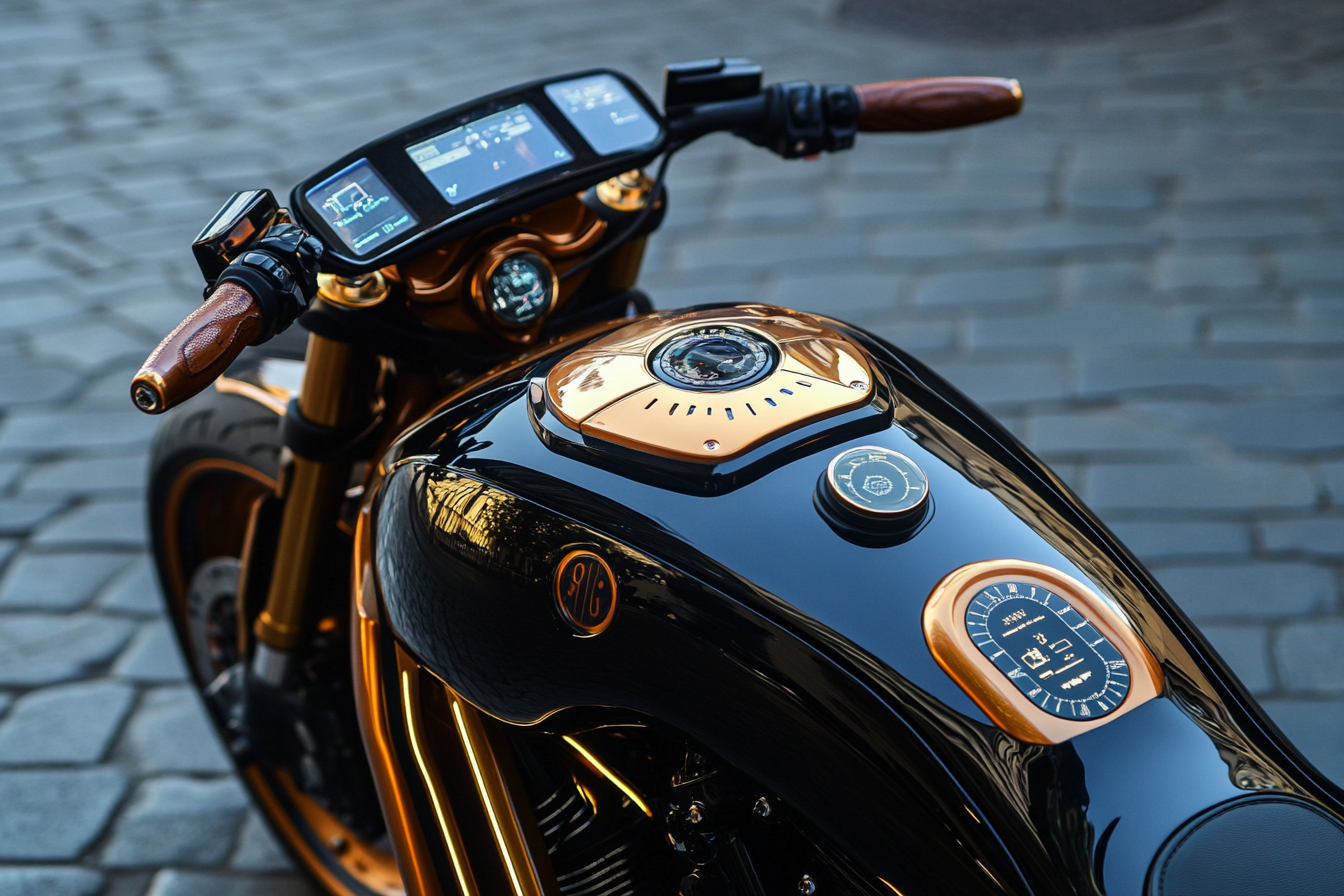
Connected dashboards, also known as digital dashboards, are a type of instrument cluster that displays information about the motorcycle’s performance and status in a digital format. These dashboards are connected to the motorcycle’s internal systems and can provide real-time data to the rider. On the other hand, smart sensors are devices that can collect and transmit data about the motorcycle’s performance, such as speed, temperature, and fuel levels. When combined, these technologies create a powerful tool that can enhance the riding experience in numerous ways.
One of the main benefits of using connected dashboards and smart sensors is the ability to monitor the motorcycle’s performance in real-time. With traditional analog gauges, riders had to rely on their instincts and experience to gauge the motorcycle’s performance. However, with connected dashboards, riders can have access to accurate and up-to-date information about their motorcycle’s speed, fuel levels, and other important metrics. This not only improves the overall riding experience but also promotes safety on the road.
Moreover, connected dashboards and smart sensors can also provide valuable insights into the motorcycle’s maintenance needs. By constantly monitoring the motorcycle’s performance, these technologies can detect any potential issues or malfunctions before they become major problems. This allows riders to take proactive measures and avoid costly repairs in the future. Additionally, some connected dashboards even have the ability to schedule maintenance reminders, making it easier for riders to keep their motorcycles in top condition.
Another advantage of using connected dashboards and smart sensors is the ability to customize the riding experience. With traditional analog gauges, riders had limited options for personalization. However, with digital dashboards, riders can choose from a variety of display options, such as different color schemes and layouts. Some dashboards even have the ability to connect to a smartphone app, allowing riders to customize their dashboard settings and receive notifications on their phone.
In addition to customization, connected dashboards and smart sensors also offer convenience for riders. With the integration of GPS technology, riders can have access to navigation and mapping features directly on their dashboard. This eliminates the need for separate GPS devices or constantly checking a phone for directions. Furthermore, some dashboards also have the ability to connect to music streaming services, allowing riders to listen to their favorite tunes while on the road.
The benefits of using connected dashboards and smart sensors are not limited to just the rider. These technologies also provide valuable data to motorcycle manufacturers. By collecting data on how riders use their motorcycles, manufacturers can gain insights into consumer behavior and preferences. This information can then be used to improve future motorcycle designs and features, ultimately benefiting riders in the long run.
In conclusion, the rise of connected dashboards and smart sensors has brought about a new era of motorcycles 2.0. These technologies offer numerous benefits, including real-time performance monitoring, maintenance insights, customization options, convenience, and valuable data for manufacturers. As technology continues to advance, we can expect even more innovative features to be integrated into motorcycles, making the riding experience safer, more efficient, and more enjoyable.
How Tableaux de Bord Connectés and Intelligent Capteurs are Revolutionizing the Motorcycle Industry
In today’s fast-paced world, technology is constantly evolving and transforming various industries. The motorcycle industry is no exception, as it is now entering the era of « moto 2.0″ with the introduction of connected dashboards and intelligent sensors. These advancements are revolutionizing the way motorcycles are designed, manufactured, and ridden.
Tableaux de bord connectés, or connected dashboards, are essentially digital displays that provide real-time information to the rider. They are equipped with sensors that collect data from various parts of the motorcycle and display it in an easy-to-read format. This technology has been around for a few years now, but it is becoming more advanced and widely used in the motorcycle industry.
One of the main benefits of connected dashboards is the ability to monitor the performance of the motorcycle in real-time. This includes information such as speed, RPM, fuel level, and even tire pressure. With this data readily available, riders can make adjustments to their riding style or take necessary maintenance measures to ensure their motorcycle is running at its best.
Another advantage of connected dashboards is the ability to connect to a smartphone or other devices. This allows riders to access additional features such as navigation, music, and even receive notifications from their phone. This not only enhances the riding experience but also promotes safety by reducing the need for riders to take their eyes off the road to check their phone.
Intelligent capteurs, or sensors, are also playing a significant role in the evolution of motorcycles. These sensors are embedded in various parts of the motorcycle and collect data that is then transmitted to the connected dashboard. They are designed to monitor the performance and condition of the motorcycle, providing valuable insights to both the rider and manufacturers.
One of the most significant benefits of intelligent sensors is their ability to detect potential issues before they become major problems. For example, a sensor can detect a drop in tire pressure and alert the rider before it leads to a flat tire. This not only saves the rider from potential accidents but also reduces the cost of maintenance and repairs.
Intelligent sensors are also being used in the development and testing of new motorcycles. Manufacturers can collect data from these sensors to analyze the performance of their prototypes and make necessary improvements. This not only speeds up the development process but also ensures that the final product is of the highest quality.
The use of connected dashboards and intelligent sensors is not limited to just performance and safety. They are also being utilized in the design and customization of motorcycles. With the help of these technologies, riders can personalize their riding experience by adjusting settings such as suspension, throttle response, and even the sound of the engine.
Furthermore, connected dashboards and intelligent sensors are also promoting the concept of « smart riding. » This involves using data collected from the motorcycle to provide riders with personalized recommendations for their riding style. For example, if a rider tends to brake too hard, the dashboard can suggest adjusting the brake sensitivity to improve their riding technique.
In conclusion, the introduction of connected dashboards and intelligent sensors is revolutionizing the motorcycle industry. These technologies are not only enhancing the riding experience but also promoting safety, improving performance, and streamlining the design and development process. As technology continues to advance, we can expect to see even more innovations in the world of motorcycles, making moto 2.0 an exciting era to be a part of.
Maximizing Performance and Safety with Tableaux de Bord Connectés and Smart Sensors for Motorcycles 2.0
In today’s fast-paced world, technology has become an integral part of our daily lives. From smartphones to smart homes, we are constantly surrounded by devices that make our lives easier and more efficient. The world of motorcycles is no exception to this trend, as the rise of connected dashboards and smart sensors has ushered in a new era of motorcycling – the era of the motorcycle 2.0.
Tableaux de bord connectés, or connected dashboards, are a revolutionary addition to the world of motorcycles. These dashboards are essentially a digital display that provides riders with real-time information about their bike’s performance and surroundings. They are connected to the bike’s internal systems and can display a wide range of data, from speed and RPM to fuel levels and tire pressure.
One of the main advantages of connected dashboards is their ability to provide riders with a comprehensive overview of their bike’s performance. This is especially useful for long-distance riders who need to keep track of their fuel consumption and tire pressure to ensure a safe and smooth ride. With a connected dashboard, riders no longer have to rely on guesswork or manual checks to monitor their bike’s performance – all the information they need is right at their fingertips.
Moreover, connected dashboards also come equipped with advanced safety features that can help prevent accidents on the road. For instance, some dashboards have a built-in GPS system that can provide riders with turn-by-turn directions, eliminating the need to constantly check a map or GPS device while riding. They can also display weather updates and traffic information, allowing riders to plan their route accordingly and avoid potential hazards.
Another crucial aspect of the motorcycle 2.0 is the use of smart sensors. These sensors are small devices that are attached to various parts of the bike, such as the engine, brakes, and tires. They collect data in real-time and send it to the connected dashboard, providing riders with a detailed analysis of their bike’s performance.
Smart sensors are particularly useful for maximizing a bike’s performance. They can detect any potential issues or malfunctions in the bike’s systems and alert the rider before they become a major problem. This not only helps prevent breakdowns but also saves riders from costly repairs in the long run.
Furthermore, smart sensors can also help riders improve their riding skills. By analyzing data such as speed, acceleration, and braking patterns, riders can identify areas where they can improve and become safer and more efficient riders. This is especially beneficial for new riders who are still learning the ropes of motorcycling.
In addition to performance and safety benefits, smart sensors also have a positive impact on the environment. By providing riders with real-time data on fuel consumption, they can help riders adopt a more eco-friendly riding style. This not only reduces carbon emissions but also saves riders money on fuel costs.
The motorcycle 2.0 is not just limited to connected dashboards and smart sensors – it also includes other technological advancements such as Bluetooth connectivity and voice commands. With Bluetooth connectivity, riders can connect their smartphones to their bike’s dashboard and access features such as music, calls, and messages hands-free. Voice commands, on the other hand, allow riders to control their bike’s systems and features without taking their hands off the handlebars, further enhancing safety on the road.
In conclusion, the era of the motorcycle 2.0 is here, and it is revolutionizing the way we ride. With connected dashboards and smart sensors, riders can maximize their bike’s performance, improve their safety, and reduce their impact on the environment. As technology continues to advance, we can only expect to see more innovative features and improvements in the world of motorcycles.
Conclusion
In conclusion, the emergence of connected dashboards and intelligent sensors in the motorcycle industry marks the beginning of a new era for motorcycles, often referred to as « moto 2.0 ». These advancements in technology allow for a more integrated and personalized riding experience, with features such as real-time data monitoring, navigation, and safety alerts. This not only enhances the overall riding experience for motorcyclists, but also improves safety and efficiency on the road. As these technologies continue to evolve, we can expect to see even more innovative and advanced features in the future, making the moto 2.0 era an exciting time for the motorcycle industry.