The Science of Grip: Choosing the Right Motorcycle Tyres for Belgian Weather
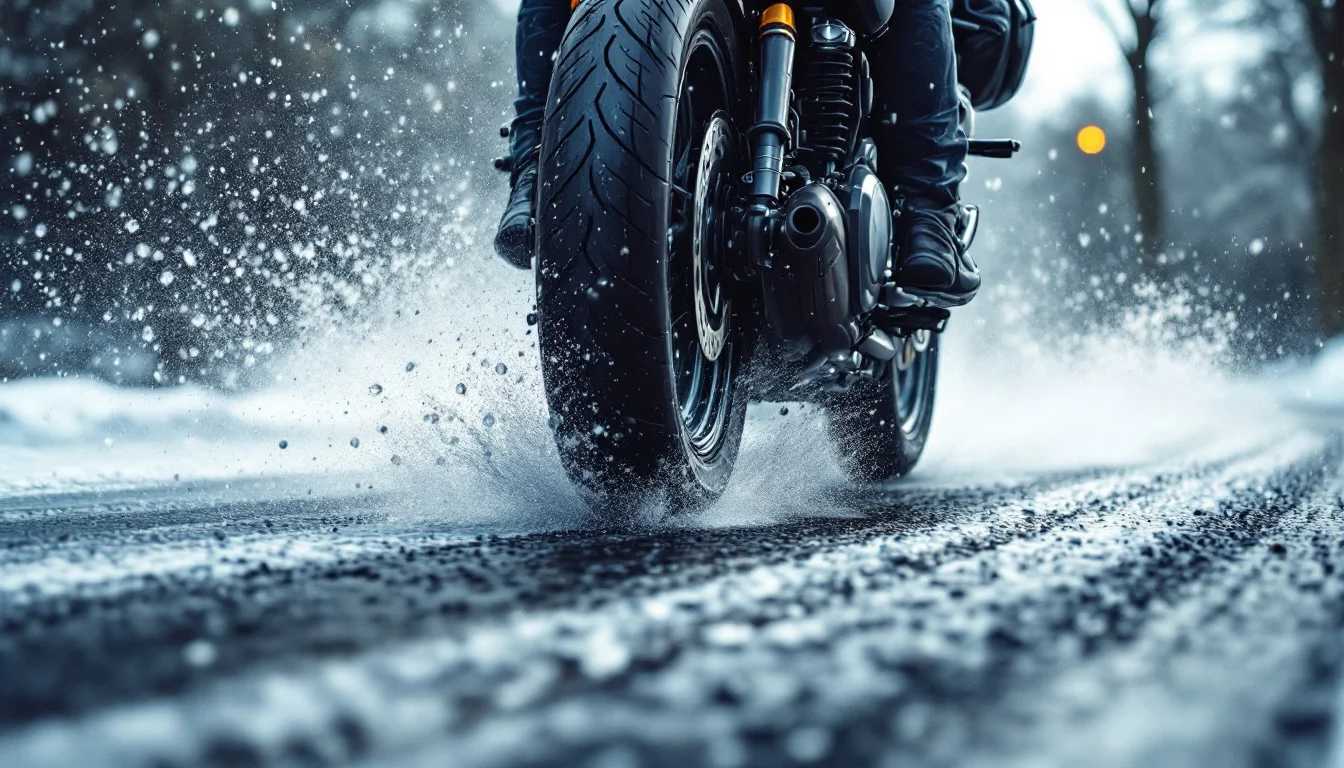
Navigating Belgian roads on a motorcycle requires a profound understanding of physics, especially when autumn and winter conditions set in. Unlike four-wheeled vehicles, motorcycles depend entirely on two contact patches to maintain stability over slick cobblestones, wet tarmac, and freezing asphalt. However, consumer automotive information is heavily biased toward passenger cars, leaving year-round riders with a distinct informational disadvantage.
While automotive drivers benefit from standardised consumer protections and visual guides, motorcyclists must actively decode the structural realities of modern rubber. To safely commute or tour through unpredictable local weather, a rider needs more than basic road awareness. They must master the chemical elasticity thresholds of rubber, understand how specialised compounds manipulate traction, and adapt a heavily car-centric set of traffic laws to their highly exposed, two-wheeled reality.
Key Takeaways:
- Temperature Sensitivity: Normal tyre rubber loses elasticity and mechanical grip below approximately 7°C.
- Chemical Engineering: Specialised silica compounds keep tyres soft and grippy in freezing conditions.
- Regulatory Gap: Motorcycle tyres are not covered by the EU labelling framework designed for passenger car tyres, leaving riders without the standardised visual guides that car buyers receive.
- Local Law: Belgian law does not require winter tyres, meaning summer tyres may be used year-round, though the 1.6 mm minimum tread depth is strictly enforced at technical inspection; cross-border travel into Germany or Austria during active winter conditions may trigger a situational winter-tyre duty under those countries' rules.
The Science of Grip: Why 7°C is the Magic Number
Standard rubber behaves predictably in summer heat but undergoes dangerous structural changes as the environment cools. According to a tyre advisory note by Belgian tyre distributor Donckers, the elasticity of normal tyre rubber decreases sharply below about 7°C. When standard compounds drop below this critical temperature, they harden, losing their ability to conform to the microscopic imperfections of the road surface. This hardening directly translates to a severe loss of mechanical traction.
What Is the Chemical Advantage of Silica?
To combat this temperature sensitivity, the industry relies heavily on specialised chemical engineering. Winter-capable tyres counter cold-weather hardening with a special silica-based compound that stays soft even in freezing temperatures. According to winter-tyre guidance from specialists at Banden Claerhout, a reliable rule of thumb for changing to winter-optimised tyres is to make the switch when the temperature remains around or below 7°C for long periods, particularly if you regularly drive in cold, humid conditions.
Does the EU Tyre Label Apply to Motorcycles?
Unfortunately, motorcyclists face a severe lack of standardised consumer transparency when selecting these silica-rich compounds. Passenger car drivers enjoy mandated clarity: the EU tyre label shows grades for metrics including rolling resistance (fuel consumption), wet grip, and external rolling noise. Furthermore, where applicable, passenger car labels feature explicit snow and ice icons, alongside a QR code linking directly to the EPREL product specifications database for deep technical verification.
This comprehensive EU labelling framework covers cars, vans, and heavy-duty vehicles, and does not extend to the motorcycle market. Motorcyclists do not get a simple, colour-coded sticker grading wet grip or rolling noise. Instead, riders must proactively research silica content and compound behaviour, relying on raw physics rather than government-mandated retail labels to ensure their machines remain safe when the thermometer drops.
Micro-Climates and Multi-Compounds: The Perfect Belgian Setup
Belgium is characterised by notorious, highly localised micro-climates that complicate traction management. A rider can easily leave a dry city centre and encounter heavily saturated rural roads just a few kilometres away. Formula 1's observations of the Belgian Grand Prix perfectly illustrate this environmental unpredictability. At Spa-Francorchamps, the circuit's varying topography exposes certain sections to precipitation while others remain unaffected. Drivers often encounter sections that are dry alongside sections that remain wet, making the tyre choice incredibly delicate between full slicks and intermediates.
How Does Polymer Architecture Bridge the Gap?
For a daily motorcycle commuter, changing tyres mid-journey to match a damp valley or a dry highway is impossible. The structural solution to this highly variable Belgian environment lies in advanced manufacturing geometry. Modern tyre rubber is not purely natural; rather, a tyre compound is a complex mixture of organic and inorganic polymers.
Crucially, a compound choice is directly linked to its intended use, prompting manufacturers to engineer tyres that feature a different compound in the centre than on the shoulders. In a dual-compound setup, the centre utilises a harder polymer mixture for faster rolling and improved highway durability, while the edges rely on a significantly grippier, softer compound. While this principle is well established in tyre engineering broadly, riders should verify with a specialist that any specific motorcycle tyre they are considering uses this architecture, as construction varies by model and intended use.
When a rider is upright on a dry, straight highway, the harder centre polymer resists premature wear. When that same rider leans into a wet, shaded corner in the Ardennes, the softer edge compound engages the asphalt, providing the necessary mechanical grip to survive the exact type of damp, unpredictable conditions that plague Spa-Francorchamps.
Motorcycle Tyre Selection Criteria Overview
Based on established compound physics and Belgian regulations, identifying the right setup depends on balancing use-case and legality:
- Touring and Commuting: Multi-compound touring rubber (hard centre, soft edge) with high-silica content provides the necessary adaptability for mixed wet/dry routes and sub-7°C cold grip.
- Extreme Winter Conditions: For severe frost or ice, studded setups are legally permitted but come with extreme operational compromises (speed restrictions and uniform fitment rules), rendering them largely impractical for standard road commuting.
The Legal Landscape: What Belgian Law Actually Requires
Navigating the technical legality of winter riding in Belgium reveals a stark contrast between recommended safety practices and actual statutory requirements. According to Banden Claerhout, winter tyres are not required by law in Belgium. Year-round riders are legally permitted to operate on standard summer rubber throughout January, though doing so severely compromises mechanical grip in cold weather.
How Strictly Are Wear Limits Enforced?
While seasonal compound rules are nonexistent, Belgian authorities strictly regulate physical tyre degradation. The metric used during official technical inspections is uncompromising. Donckers notes that the small tread-wear indicator blocks situated inside a tyre's tread grooves are exactly 1.6 mm high, which serves as the legal minimum tread depth.
When a motorcycle is evaluated at a technical inspection centre, this measurement is absolute. Once the surrounding tread has worn down to the exact height of those 1.6 mm indicator blocks, the tyre is officially considered worn out. A vehicle presenting with rubber at this limit will be automatically rejected at technical inspection, forcing an immediate replacement before the motorcycle can legally return to the road.
Are Studded Tyres a Viable Setup?
For riders attempting to navigate the most severe icy conditions, there are highly specific edge-case allowances. Banden Claerhout confirms that studded tyres are legally permitted in Belgium from 1 November to 31 March on vehicles up to 3.5 tonnes, though the regulations do not explicitly detail their specific applicability to motorcycles. However, the regulatory framework governing this extreme hardware imposes severe operational compromises based on general vehicle rules:
- Uniform Fitment: When studded tyres are used, they must be fitted on all wheels of the vehicle, which also includes any towed trailers weighing over 500 kg.
- Strict Velocity Caps: Operational speeds are drastically legally restricted to mitigate road surface damage.
Given these profound speed restrictions and the mandatory uniform fitment on all wheels, studded setups remain an impractical choice for the vast majority of Belgian motorcyclists.
Pressure Drops and Cross-Border Touring
Even the most advanced silica compound cannot function correctly if its structural profile is compromised by incorrect inflation. Thermodynamics dictate that cold weather cools the air inside a tyre casing, lowering its pressure. Banden Claerhout emphasises that low tyre pressure in cold weather directly lengthens braking distance, heavily compromising rider safety during emergency stops.
Do You Need TPMS on a Motorcycle?
To combat cold-weather deflation, new passenger cars sold in Europe come equipped with Tyre Pressure Monitoring Systems (TPMS) as standard. When a car experiences winter pressure loss, the TPMS warning light activates, alerting the driver to a hazard that should never be ignored. Furthermore, automotive systems allow for recalibration via an on-board menu or by a professional garage after adjustments are made.
In stark contrast, basic and older motorcycles lack this equipment. Without a dashboard warning light to indicate pressure loss, motorcyclists must manually monitor their tyre pressure with an external gauge, requiring hyper-vigilance as ambient winter temperatures fluctuate.
What Are the Cross-Border Legal Traps?
While Belgian law offers leniency regarding winter compounds, riders heading east face strict regulatory boundaries. According to Banden Claerhout, in countries such as Germany and Austria, a situational winter tyre duty applies to motor vehicles in active winter conditions, though the specific legal application to motorcycles can be ambiguous.
If a Belgian motorcyclist is riding through those regions during snow, ice, or frost, winter tyres may be legally required under local rules. A setup that perfectly satisfies Belgian technical inspections may result in fines or other enforcement action the moment a touring rider crosses the border into Germany or Austria during a sudden cold snap. Riders are advised to verify the current rules of each country directly before travelling, as these requirements can depend on specific conditions and are subject to change.
Conclusion: Finding the Right Setup
As European winters shift from mild dampness to sudden freezing spells, how manufacturers will continue to adapt their dual-compound architectures to handle volatile seasonal extremes is an ongoing focus in motorcycle engineering. Standard automotive garages may lack the dedicated local expertise required for motorcycle fitment to match highly specific polymer setups to a given machine.
Finding the right setup often requires specialised attention. Centres like Allroadmoto, based in Belgium, offer a wide range of motorcycle tyre brands covering everything from heavy-duty off-road blocks to advanced touring tyres. Specialised motorcycle centres provide professional mounting, precise balancing, and wheel alignment, alongside crucial advice on manual tyre pressure management and ongoing maintenance, ensuring riders can safely navigate erratic local conditions.