Motorcycle Chain Maintenance: The Physics of Cleaning, Lubricating and Tensioning
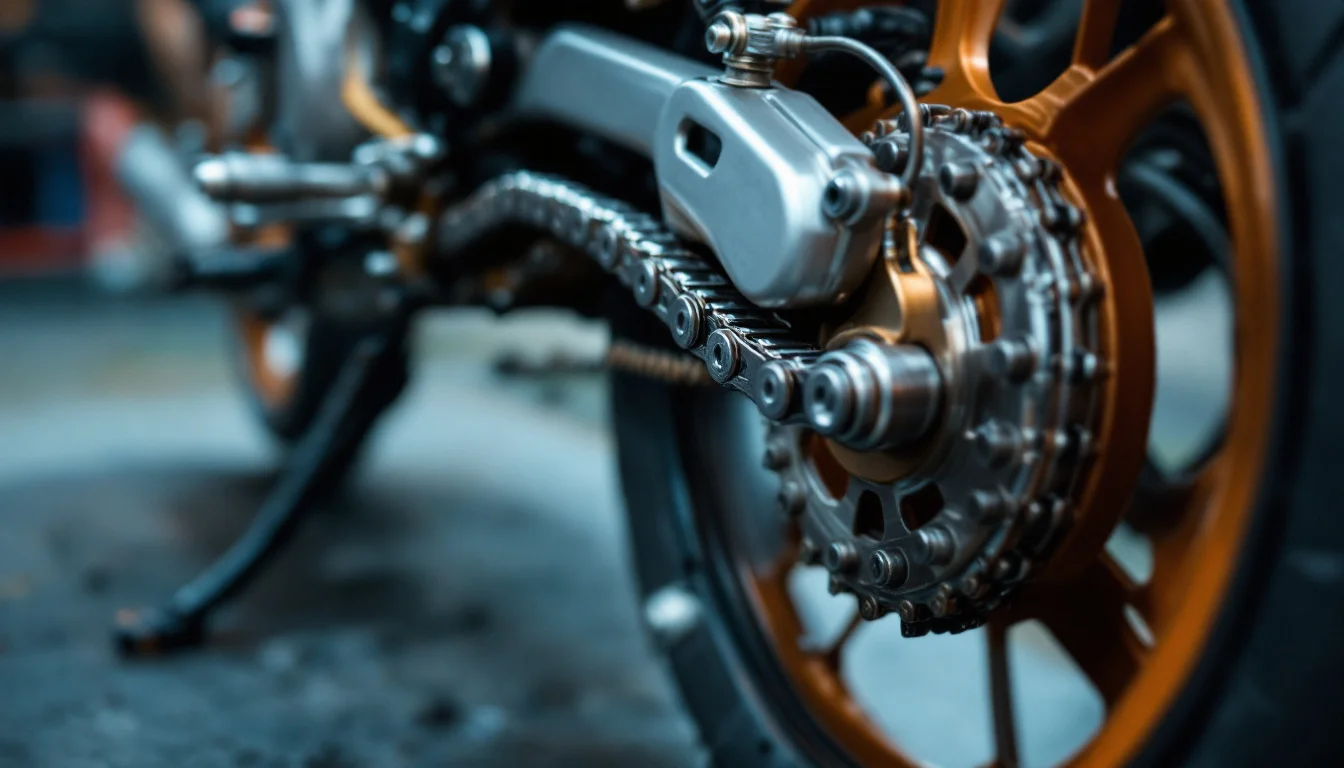
The motorcycle final drive transfers immense rotational force from the gearbox to the rear wheel. Yet, despite its critical role, the drive chain remains highly vulnerable to environmental degradation. Treating chain maintenance as a simple cosmetic chore ignores the fundamental physics at play within the drivetrain.
When a motorcycle chain accumulates dirt, grit, and road debris, the result is an increase in physical drag. If the motorcycle chain is dirty, it can cause more friction to occur, which directly reduces fuel efficiency as the engine works harder to overcome mechanical resistance.
However, the stakes extend far beyond fuel economy. Dirt mixed with lubricant acts as an abrasive, accelerating wear on chain components under tension. Unchecked abrasive wear can eventually compromise the structural integrity of the chain over time, which constitutes a severe safety issue for the rider. Maintaining this component requires more than occasional attention; it requires a systematic protocol based on solvent chemistry, heat transfer, and rotational mechanics.
Key Takeaways
- Chemical isolation: Always allow a drying period after cleaning to prevent residual solvents from compromising fresh lubricant, keeping in mind that optimal drying times vary based on the specific cleaner and ambient temperature.
- Thermal balance: Apply lubrication to a warm chain to ensure fluid penetration, but sources differ on how warm is acceptable; the practical consensus is to wait until the chain is warm to the touch rather than hot.
- Targeted application: Focus lubricant primarily on the inside of the links and the seals to aid penetration and minimize outward fling.
- Environmental adaptation: Adjust maintenance mileage based on riding conditions, shifting from higher-mileage street intervals to more frequent off-road cleaning cycles.
How Often Should You Clean a Motorcycle Chain?
A common source of confusion for riders is the conflicting advice regarding maintenance intervals. Establishing a baseline schedule requires understanding how different environments alter the friction variables acting on the drivetrain.
The Environmental Matrix
Motorcycle gear specialist RAD recommends that riders fully clean the entire motorcycle chain every 1500 to 3000 km to get the most out of the chain. Conversely, technical guidelines from off-road equipment distributor 24MX state that to keep a motorcycle in peak working order, the chain should be cleaned every 500 to 1,000 km (300 to 600 miles), and more frequently when riding in areas where a lot of dirt and mud accumulate.
These seemingly contradictory guidelines actually form a cohesive matrix when categorized by environmental exposure. Street commuting generates dry, predictable wear, supporting the extended 1500–3000 km cleaning interval cited by RAD. Off-road riding introduces mud and abrasive grit, which attack O-rings and X-rings, necessitating more frequent cleaning in line with the shorter interval advised by 24MX.
Manufacturer Lubrication Intervals
Between deep cleaning sessions, frequent lubrication is required to replenish the protective barrier. The required frequency depends heavily on the chemical formulation of the product used and the intended riding application.
| Lubricant Type | Intended Application | Manufacturer Interval |
|---|---|---|
| Motul MC Care chain paste | Sporty use | 500 km |
| S100 Dry Lube chain spray | Offroad | 600 km |
| S100 High-End chain spray | Street, extreme conditions | 700 km |
| S100 White chain spray | Street, all conditions | 1000 km |
By matching the specific chemical compound to the riding environment, riders can optimize their maintenance schedule without over-servicing or neglecting the drivetrain.
Why Must You Wait After Cleaning a Motorcycle Chain?
Deep cleaning a chain is essentially an exercise in applied chemistry. The goal of deep cleaning is to dissolve old grease and embedded dirt without damaging the internal rubber seals. The internal rubber seals (O-rings or X-rings) hold the factory grease between the pins and the bushings.
The Solvent Action
Dedicated chain cleaners rely on solvents to dissolve grease and grime. When a rider sprays the chain and agitates the links with a specialized brush, these solvents detach the contaminated grime from the metal surface. Once the dirt is liquefied, it can be smoothly wiped away with a clean microfiber cloth.
The Evaporation Window
However, a critical step is often overlooked during the transition from cleaning to lubricating. The very solvents that make chain cleaners effective need to fully dissipate before fresh lubricant is applied.
After the physical cleaning process is complete, the chain should be allowed to dry fully before lubricating, to prevent lubricating on top of remnants of chain cleaner. Skipping this brief waiting period means residual cleaner can compromise the new layer of protective grease, significantly reducing the effectiveness of the subsequent lubrication step.
Should You Lube a Warm or Cold Chain?
Applying chain lube correctly requires balancing temperature dynamics and rotational forces. A persistent debate within the riding community centers on the thermal state of the metal during application.
The Temperature Resolution
According to RAD's maintenance protocols, lubricant can be applied to the chain while it is still slightly warm, as the best time to lubricate the chain is after a ride when it is well heated. Warmth can help the lubricant work effectively and penetrate the chain links.
However, this introduces a thermal boundary. Sixten warns that a motorcycle chain should never be lubricated while hot; the chain should be allowed to cool down first so the product does not evaporate too quickly. The practical resolution suggested by these two sources together is moderate heat: wait until the chain is warm to the touch rather than scalding hot, so that the lubricant can penetrate without flash-evaporating on contact.
Targeting and Penetration
Spatial targeting is just as critical as temperature control. A common error is coating the exterior side plates in a thick layer of grease. Chain lubricant is generally best applied to the inside of the links, targeting the rollers and seals, as simply coating the outer side plates provides less mechanical benefit. This practice ensures that capillary action and mechanical pressure from the sprockets help draw the lubricant into the mechanical joints, while centrifugal force naturally pulls any excess outward and away from the chain as the motorcycle moves.
Saturation and Curing
More lubrication does not equal better protection. Over-lubricating a chain should be avoided because excess lubricant can attract dirt and cause a buildup of abrasive grime; a light, precise coating is entirely sufficient for mechanical protection.
Once applied, the lubricant needs time to work. RAD recommends leaving it to soak in for at least 10 to 15 minutes to allow it to penetrate the chain properly and provide sufficient lubrication before the motorcycle is ridden. Sixten Environmental similarly advises waiting a few minutes and not starting the bike immediately after application.
How Tight Should a Motorcycle Chain Be?
After the chemical and physical processes of cleaning and lubricating are complete, a mechanical verification is necessary. Ensuring the correct amount of slack is maintained is vital; a chain that is too tight places excessive stress on drivetrain components, while one that is too loose risks derailing. Riders should always refer to the specific measurements in their motorcycle's owner's manual or on the swingarm sticker to set the correct tension, as the ideal specification varies by model.
The Tactile Verification
Verifying the success of the lubrication phase does not require complex tooling. The easiest way to know whether a chain still needs lubricant is to run a finger along the inside of the chain. If grease remains on the fingertip after this swipe, the chain is still adequately lubricated and protected from friction.
Performing this final tactile check guarantees that there will be sufficient material to draw outward during the next ride, maintaining the barrier between the metal components and the elements.
FAQ
Can I use a pressure washer to clean my motorcycle chain?
High-pressure equipment should not be used around the motorcycle chain, as it could seriously damage the chain. High-pressure water can force contaminants past the chain's seals, potentially displacing internal lubrication and leading to accelerated wear and corrosion. Always rely on chemical solvents and a soft-bristled brush for dirt removal rather than pressurized water.
Conclusion
While modern engineering has introduced alternative power transfer methods like carbon-reinforced belts and enclosed shaft drives, the traditional roller chain remains widely used for lightweight, high-efficiency power delivery. Its continued presence in both high-level motorsport and daily commuting requires treating the final drive not as a static component, but as an active physical system. By respecting the chemical limitations of solvents and the mechanical dynamics of the chain, riders can ensure their drivetrain performs flawlessly under immense mechanical stress.