Hybrid vs. Plug-In Hybrid SUV in Belgium: The 2026 Decision Guide
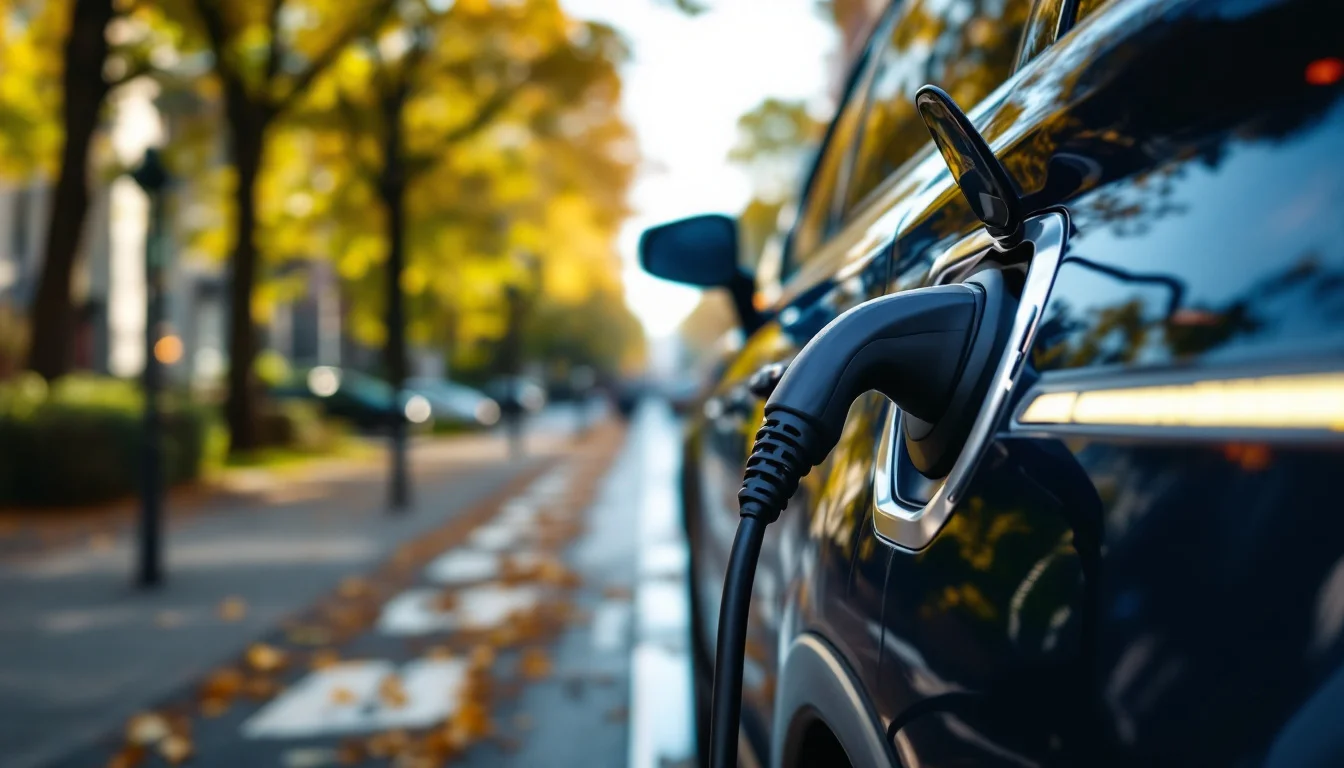
The January 2026 tax cliff has fundamentally reshaped the Belgian automotive landscape, ending an era of untargeted corporate tax optimization. For years, the prevailing industry narrative has suggested a binary market trajectory: buyers must either transition entirely to fully electric vehicles or face financial penalties. However, this oversimplified view ignores a massive, highly nuanced segment of the current market.
Today, the choice between a self-charging hybrid (HEV) and a plug-in hybrid (PHEV) sport utility vehicle has evolved from a generic preference into a highly specific calculation. New legislative realities have shifted how corporate fleets view plug-in hybrids. Yet, these powertrains are far from obsolete.
Instead, they now serve distinctly different profiles. Standard hybrids offer a zero-constraint mobility solution for private buyers prioritizing mechanical reliability. Meanwhile, modern plug-in hybrids serve as energy-storage tools for homeowners with optimized solar infrastructure, while older acquisitions continue to benefit from transitional tax regimes.
The 2026 Tax Fracture: Who Can Still Benefit from a PHEV?
The legislative threshold crossed on January 1, 2026, reshaped the Belgian vehicle market, standardizing the zero-deductibility rule across all new business vehicle orders. Understanding this landscape, including transitional rules for independent professionals, is critical to avoid financial losses.
The Universal 0% Baseline
For all business structures, the era of the subsidized combustion engine is definitively over. For vehicles ordered from January 1, 2026 onwards, combustion engine vehicles—explicitly including both self-charging hybrids and plug-in hybrids—are no longer tax-deductible for any business use, dropping to a 0% deductibility rate for both companies and self-employed professionals (FEBIAC, Advice for the self-employed: car taxation is changing). Whether the buyer operates through a traditional corporate structure (société) or as an individual (personne physique), a newly ordered PHEV now represents a non-deductible expense.The Transitional Framework for Independents
Conversely, a specific transitional framework remains operational for historically acquired vehicles. A self-employed person taxed as an individual (personne physique) who ordered a PHEV SUV emitting 50 g CO2/km or less prior to the legislative cutoff dates retains a calculated tax deductibility, often utilizing the formula 120% − (0.5% × g CO2/km) (Meilleure-voiture.be, Best plug-in hybrid SUV Belgium 2026).This transitional benefit relies on a strict statutory formula applicable to older orders:
- Deductibility calculation: 120% − (0.5% × g CO2/km)
- Fuel expenses: Capped at 50% deductibility for hybrid cars acquired from 1 July 2023 onwards, subject to specific transition periods (FEBIAC, Advice for the self-employed: car taxation is changing)
- Electricity expenses: Not subject to the fuel cost limitation, and therefore maintained at full deductibility under the standard rules applicable to the vehicle's order date
Flemish Road Taxes in 2026: Why ICE and Hybrids Aren't Dead Yet
Beyond federal deductibility rules, regional taxation heavily influences total cost of ownership. Private buyers operating outside the corporate tax structure must scrutinize regional circulation levies. In Flanders, recent adjustments to the fiscal code have leveled the playing field, making low-emission combustion engines competitive against fully electric alternatives.
The End of the Zero-Emission Free Ride
For years, electric vehicles enjoyed complete exemption from annual circulation taxes in the northern region. This is no longer the case. As of January 1, 2026, newly registered zero-emission vehicles in Flanders are subject to a one-time registration tax (BIV) of €61.50 and pay a flat annual circulation tax of €107.16, amounts that include additional décimes and are indexed annually on July 1 (Vlaanderen.be, Voertuigen volledig op elektriciteit of waterstof). Vehicles registered before January 1, 2026 continue to benefit from the exemption. This new baseline means electric vehicles now actively contribute to regional road maintenance, closing the absolute cost gap with ultra-efficient combustion vehicles.The Green Tax Reduction Formula
Simultaneously, Flanders continues to reward internal combustion engines that demonstrate high thermal efficiency. For non-leasing vehicles registered at the DIV from 2021 onwards (with a date of first registration in 2021 or later), the green circulation tax base amount is reduced by 0.30% for every single gram of CO2 per kilometer below the 149-gram threshold, provided the emissions remain above 24 grams, measured exclusively according to the WLTP method (Vlaanderen.be, Verkeersbelastingen voor personenwagens). Conversely, for non-leasing vehicles registered at the DIV between January 1, 2016, and December 31, 2020, the same reduction applies to the base amount below 122 grams but above 24 grams, measured according to the NEDC method.Because standard hybrids and plug-in hybrids routinely post extremely low WLTP CO2 figures, they frequently trigger substantial percentage reductions under this formula. For a private buyer in Flanders, a meticulously engineered hybrid SUV can yield annual circulation tax bills that are mathematically competitive with the newly introduced flat fee for pure electrics.
HEV (Full Hybrid): The Zero-Constraint Pragmatist
For buyers lacking dedicated driveway space, reliable workplace charging, or a favorable tax structure, the standard self-charging hybrid (HEV) stands as a pragmatic powertrain available in 2026. This architecture entirely eliminates the behavioral adaptations required by battery-dependent vehicles.
Mechanical Autonomy
A standard hybrid SUV pairs a traditional petrol engine with an electric motor, specifically omitting any capability for external charging. The onboard battery is intentionally small—typically ranging from just 1 to 2 kWh—and recharges itself entirely through regenerative braking and engine surplus (Meilleur-suv.be, Hybrid vs electric SUV Belgium). This closed-loop system requires zero user intervention: no cables, no charging cards, and no route planning around public infrastructure.Predictable Operational Costs
The primary advantage of this mechanical simplicity is a stable baseline for daily running costs, completely detached from the fluctuating prices of public fast-chargers. For urban residents, apartment dwellers, or high-mileage drivers who cannot guarantee an overnight plug-in, the HEV delivers immediate, zero-constraint fuel efficiency without the severe weight penalties associated with larger battery packs.PHEV in 2026: Massive Batteries Meet Home Solar Power
While the self-charging hybrid excels in simplicity, modern PHEV SUVs are re-engineered to function as part-time electric vehicles tailored specifically for homeowners with residential energy grids.
Synergizing with Domestic Energy
This expanded battery capacity fundamentally changes the total cost of ownership when integrated with modern residential infrastructure. For private buyers, a larger vehicle battery acts as a crucial sink for surplus domestic energy. With the installation of solar panels and a home battery, a household's overall annual self-consumption of generated electricity can increase from a baseline of approximately 28% to nearly 68% on average (Vlaanderen.be, Thuisbatterij).While electric range is impacted by thermal management, high-speed aerodynamic drag, and climate control, systematically charging the PHEV during peak solar production hours effectively eliminates the cost of the daily commute. The vehicle ceases to be a liability and becomes an active component of the household's renewable energy grid.
The Mathematical Reality of the 'Empty Battery Penalty'
The financial viability of a plug-in hybrid diminishes if the vehicle is treated like a standard combustion car. Purchasing a PHEV strictly for a tax advantage—without the discipline or infrastructure to charge it—triggers severe operational penalties due to the dead weight of its depleted battery pack.
Quantifying the Efficiency Loss
This mechanical burden is clearly documented: on the motorway with a flat battery, a heavy PHEV SUV typically consumes in the range of 7 to over 10 L/100 km depending on the model and driving conditions (Meilleure-voiture.be, Best plug-in hybrid SUV Belgium 2026). Such excess consumption compared to a dedicated self-charging hybrid fundamentally alters the total cost of ownership.If a buyer neglects to plug in, the vehicle effectively becomes an inefficient petrol car. Therefore, acquiring a PHEV without a reliable charging strategy is a mathematical error. The initial purchase premium over a standard HEV, combined with substantially higher daily fuel expenses, quickly erases any transitional tax benefits that motivated the purchase.
Frequently Asked Questions: SUV Powertrains in 2026
Is an electric SUV significantly cheaper to maintain than a hybrid?
From a strict mechanical perspective, pure electric vehicles eliminate dozens of complex internal combustion components. There is no timing belt to snap, no traditional clutch to replace, and no engine oil to change. However, the regenerative braking in an HEV reduces wear on traditional brake pads and discs, mitigating one of the primary maintenance costs of heavy SUVs. While EV drivetrains are simpler, mature HEV systems from leading manufacturers currently exhibit exceptional long-term durability.Can I charge a PHEV on a standard home plug?
Yes, external charging remains entirely viable through a domestic electrical grid. While their batteries have grown significantly larger by 2026—often requiring 8 to 11 hours for a full charge—overnight alternating current (AC) charging via a legally compliant, properly reinforced dedicated domestic socket is still a mechanically sound method for replenishing a PHEV, provided strict thermal safety standards are followed to avoid overheating risks associated with prolonged use.Conclusion
The 2026 Belgian automotive landscape demands careful calculation from SUV buyers. The universal end of deductions for new internal combustion engines introduces a definitive barrier for opportunistic plug-in hybrid purchases across all business structures. This legislative shift arrives as modern PHEVs offer near-EV daily utility through expanded onboard storage. For private buyers or professionals managing older contracts who are willing to actively manage domestic energy flows, the modern PHEV remains a viable tool for maximizing the utility of residential solar power.
--- This article is for informational purposes only and does not constitute financial advice. Consult a licensed financial advisor before making any investment decisions.